
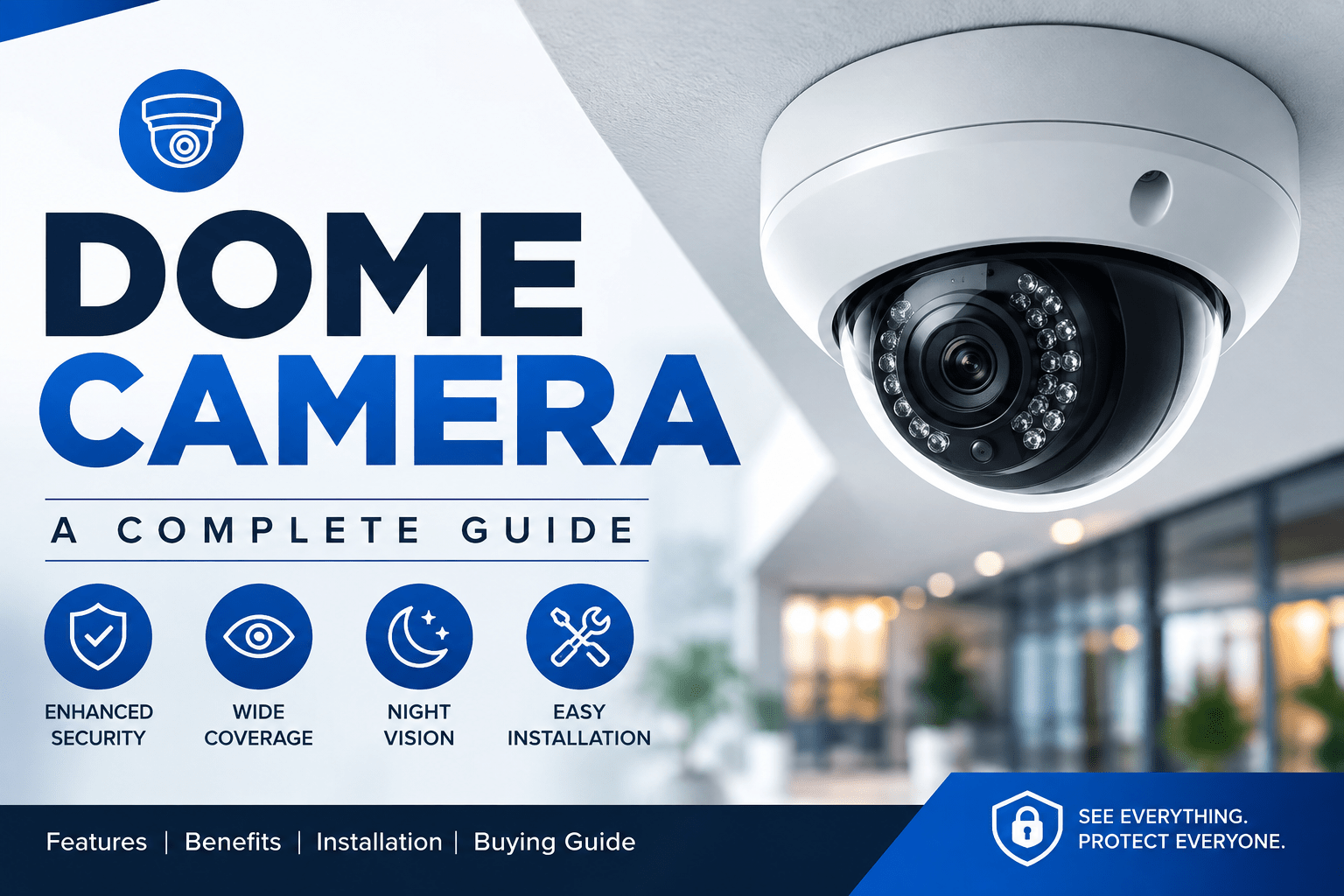
Security cameras play an important role in protecting modern homes, offices, stores, schools, warehouses, and other properties. Among the many security camera options available today, the dome camera remains a popular choice. Its compact shape, discreet appearance, and flexible installation options make it suitable for many indoor and outdoor environments.
In addition, modern surveillance systems often rely on computers, network video recorders, servers, and other electronic equipment. These devices process, store, and display video from security cameras. Because they may run continuously, they can generate significant heat. Therefore, proper computer cooling also matters in a reliable surveillance setup.
This guide explains what a dome camera is, how it works, its main features, different types, benefits, installation considerations, maintenance requirements, and the role of a CPU cooler in surveillance computers.
A dome camera uses a dome-shaped housing to protect its camera and lens. The housing gives the camera a compact appearance while helping shield internal components from dust, accidental contact, and certain environmental conditions.
Furthermore, the dome design can make the camera less noticeable than some traditional security cameras. People may also find it harder to determine the exact direction of the lens.
Manufacturers offer dome cameras with different resolutions, lenses, connectivity options, and night-vision capabilities. As a result, you can find models for homes, offices, retail stores, parking areas, warehouses, and industrial properties.
How Does a Dome Camera Work?
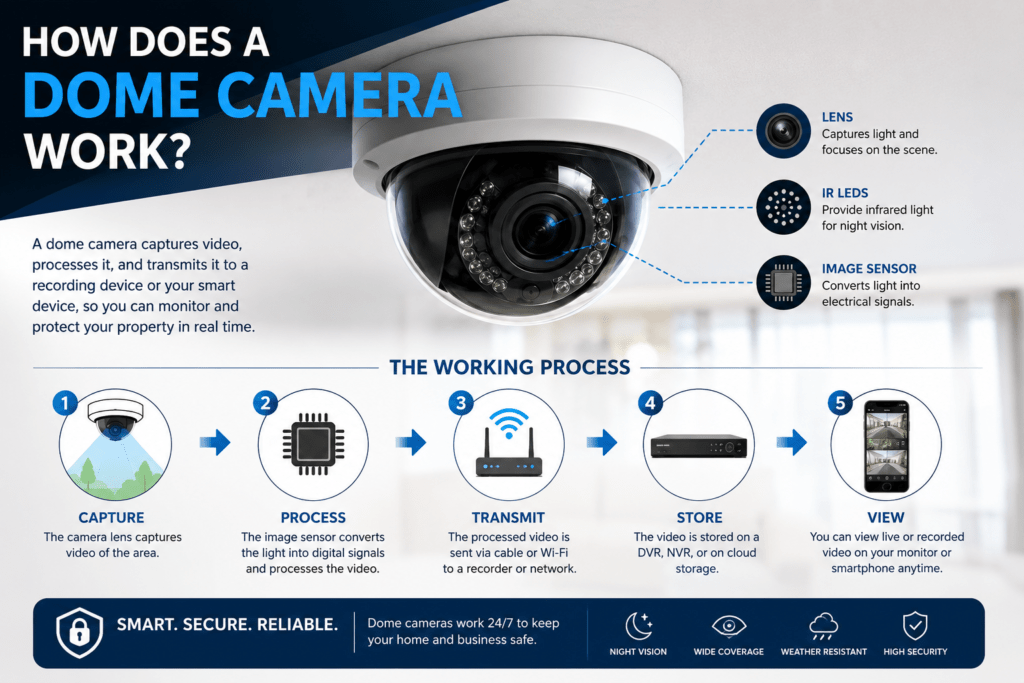
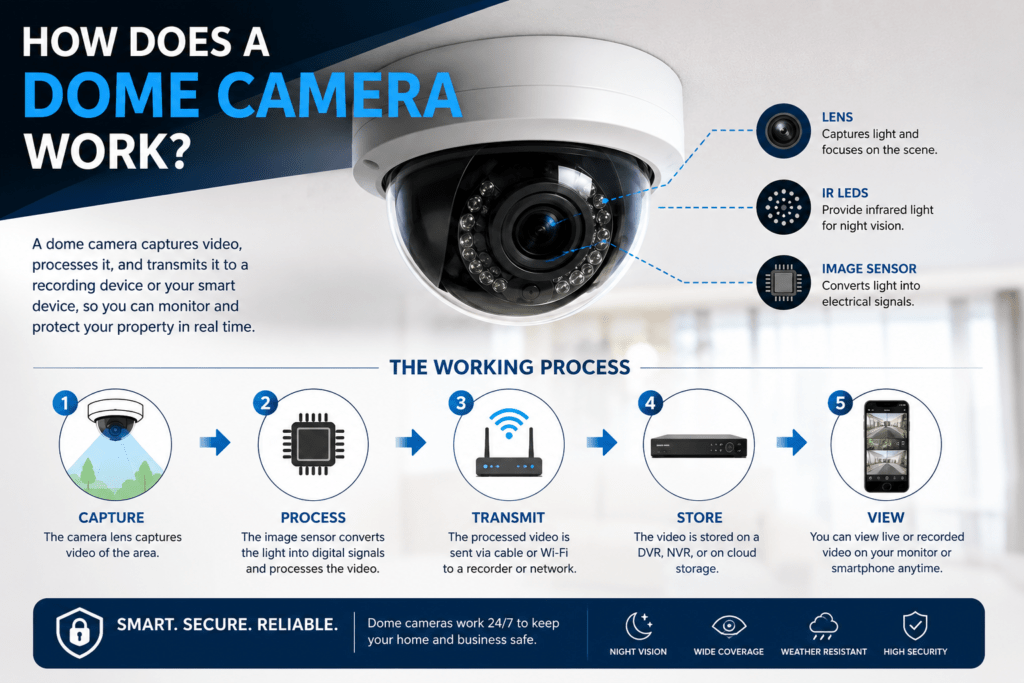
A dome camera captures video through its lens and image sensor. The image sensor converts incoming light into electronic information, while the camera processes that information into video.
Modern dome cameras generally use network or traditional video connections. For example, an IP dome camera can send digital video through a network to a network video recorder, computer, or authorized mobile device.
The basic process works as follows:
- First, the lens captures the surrounding scene.
- Next, the image sensor receives the light and creates an electronic signal.
- Then, the camera processes the captured information.
- After that, the system transmits or stores the video.
- Finally, a monitor, recorder, computer, or mobile device displays the footage.
Some advanced models also provide motion detection, infrared night vision, wide dynamic range, remote monitoring, and other useful features.
Types of Dome Cameras
Dome cameras come in several types. Each type serves different surveillance requirements.
1. Indoor Dome Cameras
Indoor dome cameras work well in homes, offices, schools, hotels, stores, and other enclosed spaces. Manufacturers usually design these models for compact installation and clear video rather than extreme weather conditions.
You can install an indoor dome camera on a ceiling or wall. For example, it can monitor entrances, hallways, reception areas, classrooms, and individual rooms.
2. Outdoor Dome Cameras
Outdoor dome cameras can handle more demanding environmental conditions. Many models include weather-resistant housings that protect internal components from rain, dust, and temperature changes.
Therefore, outdoor dome cameras can work well around building entrances, parking areas, walkways, warehouses, and other exposed locations.
3. IR Dome Cameras
IR dome cameras use infrared illumination to capture footage in low-light conditions. Consequently, they can continue monitoring an area after sunset or in poorly lit spaces.
Many models automatically switch between normal and infrared modes according to the surrounding light level.
4. IP Dome Cameras
IP dome cameras transmit digital video through a network. You can connect them to network switches, routers, network video recorders, and compatible surveillance software.
Moreover, IP technology can provide convenient remote management and integration with modern security systems. However, users should secure network-connected cameras with strong passwords and updated firmware.
5. PTZ Dome Cameras
PTZ stands for pan, tilt, and zoom. A PTZ dome camera can move horizontally and vertically while also providing zoom capabilities.
As a result, one PTZ camera can monitor a larger area than a fixed camera in some situations. Security staff can control the camera manually or configure programmed movements for automated monitoring.
Important Features of a Dome Camera
Before choosing a dome camera, consider the features that match your surveillance requirements.
High Resolution
Resolution determines how much visual detail a camera can capture. Higher-resolution cameras can provide clearer details of people, objects, signs, and other important areas.
However, higher resolution can also increase storage and network bandwidth requirements. Therefore, choose a resolution that matches both your security needs and available system resources.
Night Vision
Night vision helps a camera capture footage when visible light becomes limited. Infrared LEDs can illuminate nearby areas without requiring bright visible lighting.
For 24-hour surveillance, choose a camera with night-vision performance that matches the size and lighting conditions of the area.
Wide-Angle Lens
A wide-angle lens allows a camera to cover a broader field of view. This feature can work especially well in rooms, stores, reception areas, and other locations where one camera needs to monitor a large space.
Nevertheless, a wider viewing angle can sometimes reduce the amount of detail available at greater distances. Therefore, balance coverage with the level of detail you need.
Motion Detection
Motion detection identifies movement within the camera’s viewing area. It can help reduce unnecessary recordings and make important events easier to locate.
For example, a surveillance system can record continuously or trigger specific actions when it detects movement, depending on its configuration.
Weather Resistance
Outdoor installations require suitable protection against rain, dust, humidity, and changing temperatures. Therefore, check the camera’s weather-resistance specifications before installing it outside.
The appropriate protection level depends on the location and environmental conditions.
Remote Monitoring
Many modern IP dome cameras support remote viewing through compatible applications or software. Consequently, authorized users can check surveillance footage from a computer or mobile device.
However, always use strong passwords, updated firmware, and secure network settings when enabling remote access.
Advantages of Dome Cameras
Dome cameras offer several benefits for residential and commercial surveillance.
Discreet appearance: Their compact shape can blend naturally with ceilings and walls.
Physical protection: The dome housing can help protect the camera from dust, accidental contact, and certain environmental conditions.
Flexible installation: Many models support ceiling and wall installation, which gives users more placement options.
Wide coverage: Cameras with wide-angle lenses can monitor relatively large areas.
Professional design: The clean appearance suits offices, stores, hotels, schools, and other public-facing locations.
Night surveillance: Many models include infrared technology for monitoring in low-light conditions.
Network integration: IP models can connect with modern network-based surveillance systems.
Where Should You Install a Dome Camera?
The best installation location depends on the area you want to monitor. Common locations include entrances, hallways, staircases, parking areas, reception desks, warehouses, retail stores, and building exteriors.
Before installation, evaluate the camera’s field of view, lighting, mounting height, possible obstructions, and available power or network connections.
For example, avoid pointing the lens directly toward strong sunlight whenever possible. Bright light can reduce image quality and create glare.
In addition, choose a mounting position that provides a clear view without making the camera unnecessarily difficult to maintain.
Finally, follow applicable privacy laws and regulations when installing surveillance equipment. Avoid monitoring areas where people reasonably expect privacy.
Dome Camera and Computer Systems
Modern surveillance systems often rely on computers or dedicated recording equipment. A computer may display several camera feeds, manage recordings, run surveillance software, or perform video analysis.
When multiple cameras continuously send high-resolution video, the computer can handle a significant workload. As a result, surveillance systems may require sufficient CPU performance, memory, storage, and network capacity.
This connection between surveillance equipment and computer hardware makes cooling an important consideration.
Why Does a CPU Cooler Matter in a Surveillance System?
A CPU cooler removes heat from a computer processor. When a CPU performs calculations, it produces heat. The processor can generate even more heat when it handles demanding tasks for extended periods.
A surveillance computer may operate for many hours each day. It might process several video streams, manage recordings, run security software, or perform video analytics. Therefore, the processor may experience a sustained workload.
A suitable CPU cooler helps move heat away from the processor. As a result, the computer can maintain more stable operating temperatures during demanding tasks.
If a computer becomes excessively hot, it may reduce performance, become unstable, or shut down unexpectedly. Therefore, proper cooling can contribute to the reliability of a surveillance workstation or recording computer.
Types of CPU Coolers for Surveillance Computers
You can choose from several CPU cooling solutions depending on the computer’s workload and processor.
Air CPU Coolers
Air coolers normally combine a heatsink with one or more fans. The heatsink absorbs heat from the processor, while the fans move air across the heatsink.
Air coolers offer a simple and practical solution for many surveillance computers. They can provide effective cooling without requiring a complex installation.
Liquid CPU Coolers
Liquid coolers use a liquid-based system to transfer heat from the processor to a radiator. Fans then move air through the radiator to release the heat.
These coolers can suit higher-performance computers that handle demanding workloads. However, users should choose a model that fits the processor, case, and overall system requirements.
Stock CPU Coolers
Some processors include a basic cooler. A stock cooler may provide sufficient cooling for a computer with a moderate workload.
However, a surveillance system that continuously processes multiple high-resolution streams may benefit from a more capable cooling solution. Always check the processor’s thermal requirements before selecting a cooler.
How to Keep Your Surveillance Computer Cool
A good CPU cooler provides an important part of the cooling system, but proper airflow also matters.
First, keep the computer case vents clear. Next, clean dust from fans, heatsinks, and ventilation openings regularly. Dust buildup can restrict airflow and reduce cooling performance.
In addition, organize cables inside the case so they do not unnecessarily block airflow. Place the computer in a location with adequate ventilation, and avoid exposing it to excessive heat.
You should also check that the cooling fans operate correctly. If a fan starts making unusual noises or stops working, inspect or replace it promptly.
Dome Camera Storage and CPU Performance
Storage represents another important part of a surveillance system. Several dome cameras can generate a large amount of video data, especially when they record continuously.
Storage requirements depend on several factors, including camera resolution, frame rate, compression technology, number of cameras, and recording schedule.
For example, continuous recording generally consumes more storage than motion-based recording. Therefore, calculate your expected storage requirements before building the system.
At the same time, video analytics and multiple high-resolution streams can increase CPU and system workloads. Consequently, the recording computer should provide suitable processing power, memory, storage, and cooling.
How to Choose the Right Dome Camera
Choosing the right dome camera starts with your specific surveillance requirements.
First, determine whether you need an indoor or outdoor model. Next, consider the required resolution and viewing distance. If you need nighttime surveillance, select a camera with suitable infrared capabilities.
For a network-based system, check network compatibility and bandwidth requirements. Also, consider storage capacity and whether you need features such as motion detection, remote monitoring, audio, or PTZ functionality.
Furthermore, select equipment from a reputable manufacturer and keep its firmware updated. Reliable hardware and regular maintenance can improve the overall performance of your surveillance system.
Dome Camera Installation Tips
Proper installation can significantly affect camera performance. Start by choosing a location that provides a clear view of the area you want to monitor.
Next, install the camera at a suitable height. A very low position may expose the camera to accidental contact, while an excessively high position can make important details harder to identify.
Also, check lighting conditions before finalizing the camera position. Avoid strong backlighting when possible, and make sure nearby objects do not block the lens.
For IP cameras, use suitable network cables and connections. Finally, test the camera during both daytime and nighttime conditions to confirm that it provides the coverage and image quality you expect.
Dome Camera Maintenance
Regular maintenance can extend the useful life of your surveillance equipment.
Clean the camera lens carefully whenever dirt or dust affects image quality. In addition, inspect outdoor housings for signs of water damage, cracks, or other physical problems.
Check cables and connectors periodically. For network cameras, install firmware updates according to the manufacturer’s recommendations.
You should also change default passwords and use strong, unique credentials. These simple steps can improve the security of network-connected cameras.
Meanwhile, maintain the recording computer as well. Remove dust from the CPU cooler and other components, check that fans work correctly, and monitor system temperatures when necessary.
Security Tips for IP Dome Cameras
Because IP dome cameras connect to a network, cybersecurity deserves attention.
First, replace default usernames and passwords. Then, create strong and unique passwords for authorized accounts. Keep camera firmware and surveillance software updated as well.
Furthermore, limit remote access to trusted users. Secure the network with appropriate security controls, and disable unnecessary services or features.
If you enable remote viewing, configure it carefully and use secure access methods. Remember that an IP camera forms part of your network infrastructure, so you should protect it just like other connected devices.
Final Thoughts
A dome camera provides a practical and versatile solution for modern video surveillance. Its compact design, flexible installation options, high-resolution video, night vision, motion detection, and network connectivity make it suitable for homes and businesses alike.
Moreover, modern surveillance systems often depend on computers and network equipment to process, store, and manage video. Because these systems may operate continuously, reliable computer hardware becomes increasingly important.
A properly selected CPU cooler can help control processor temperatures when a surveillance computer handles demanding workloads. However, cooling represents only one part of system maintenance. Proper airflow, clean components, sufficient storage, reliable networking, updated software, and strong security practices also contribute to dependable operation.
Therefore, when you build or upgrade a surveillance system, consider the complete setup rather than the camera alone. By selecting the right dome camera, suitable recording hardware, adequate storage, and proper CPU cooling, you can create a more reliable and efficient monitoring system.