
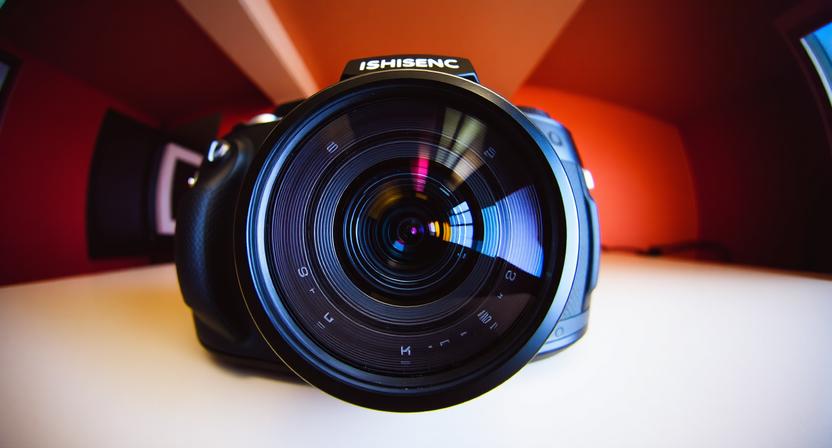
Imagine walking into a room and discovering that a single security camera can see almost everything happening around it—without needing multiple cameras pointed in different directions. Sounds impressive, right?
That is exactly where a Fisheye Camera enters the picture.
Unlike traditional security cameras that capture a relatively narrow field of view, a Fisheye Camera uses an ultra-wide-angle lens to cover a much larger area. In the right location, one camera can monitor an entire room, hallway, lobby, retail floor, or other open space while reducing blind spots.
But there is a catch: the wider the view, the more the image can be distorted. So, is a Fisheye Camera actually better than a conventional security camera?
The answer depends on where and how you use it.
What Is a Fisheye Camera?

A Fisheye Camera is a security or surveillance camera equipped with an extremely wide-angle lens. Its name comes from the way the lens captures a very broad view, similar to how a fish might see a wide portion of its surroundings underwater.
Many fisheye lenses can provide a field of view approaching 180 degrees or even more, depending on the camera design and lens configuration.
This means a Fisheye Camera can capture a large area from a single mounting position.
For security applications, that can be a major advantage.
Instead of installing several conventional cameras to cover different directions, you may be able to use one strategically positioned Fisheye Camera to monitor the same general area.
Why Is a Fisheye Camera Different?
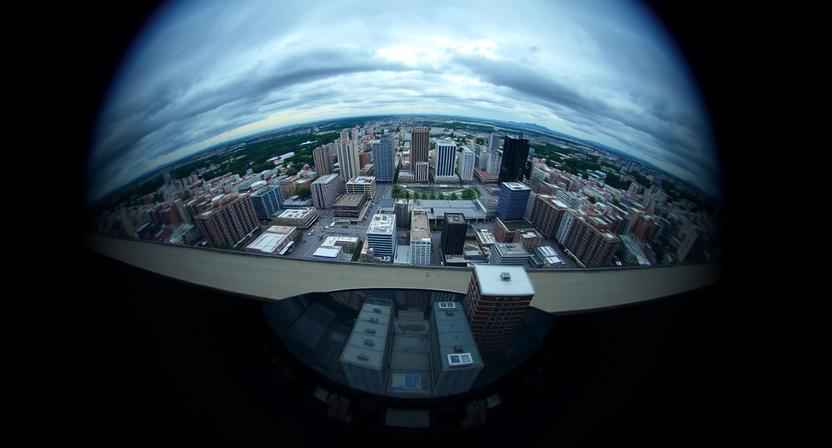
The biggest difference is simple: coverage.
A standard security camera generally focuses on a particular direction. If the camera points toward a doorway, it may capture people entering and leaving—but areas outside that viewing angle can remain hidden.
A Fisheye Camera takes a completely different approach.
Its ultra-wide lens captures a much larger portion of the surrounding environment. This makes it particularly useful for locations where broad visibility matters more than traditional, straight-looking images.
However, this wide perspective can create curved lines and visual distortion around the edges.
Modern fisheye security cameras often use software correction, sometimes called dewarping, to transform the curved image into a more natural-looking view.
That combination of wide-angle optics and intelligent software is one reason Fisheye Cameras have become increasingly interesting for modern surveillance systems.
The Suspense: What Could a Fisheye Camera See?

Here is where things get interesting.
Picture a busy retail store.
A conventional camera may watch the entrance. Another may cover the checkout area. A third may monitor an aisle.
Now imagine placing a Fisheye Camera in a carefully selected central position.
Suddenly, one camera may be able to observe a large portion of the entire area.
It does not mean every object will appear equally large or detailed. Instead, the camera provides situational awareness—a broad picture of what is happening throughout the space.
And that can be extremely valuable.
If something unexpected happens outside the normal viewing angle of a conventional camera, a wide-angle Fisheye Camera may capture it.
That is one of its biggest strengths.
How Does a Fisheye Camera Work?

The secret is its specially designed lens.
A traditional camera lens attempts to produce an image that looks relatively natural, with straight lines appearing straight. A fisheye lens intentionally uses a much wider optical perspective.
Light from a very large area enters the lens and is projected onto the camera’s image sensor.
The result is an extremely wide image.
Depending on the model, the camera may provide:
- 180-degree viewing
- 360-degree panoramic coverage
- Ceiling-mounted panoramic views
- Wall-mounted wide-angle views
- Digital dewarping
- Multiple virtual viewing windows
Some advanced models allow users to take the original panoramic image and digitally divide it into different perspectives.
For example, one portion of the image could show a doorway while another focuses on a checkout counter.
This gives a single physical camera greater flexibility.
Fisheye Camera vs. PTZ Camera

A Fisheye Camera and a PTZ Camera can both provide extensive surveillance coverage, but they work in very different ways.
A PTZ Camera means Pan-Tilt-Zoom.
It can physically move horizontally, vertically, and zoom in on a selected subject.
That makes PTZ cameras excellent for tracking specific people, vehicles, entrances, large outdoor areas, and events.
A Fisheye Camera usually takes the opposite approach.
Instead of physically moving toward a target, it captures a very broad view simultaneously.
This creates an important difference.
A PTZ Camera can zoom in dramatically on one area, but when it is pointed somewhere else, its previous viewing direction may not receive the same level of attention.
A Fisheye Camera continuously captures its wide field of view.
So, if your priority is constant broad coverage, a Fisheye Camera can be an excellent choice.
If your priority is long-distance monitoring and active subject tracking, a PTZ Camera may be more appropriate.
In some professional security systems, the two technologies can even work together.
A Fisheye Camera provides broad situational awareness while a PTZ Camera handles detailed tracking.
Where Should You Install a Fisheye Camera?

Location is extremely important.
A Fisheye Camera can be powerful, but poor placement can reduce its effectiveness.
1. Retail Stores
Retail environments often contain large open spaces where customers move in many directions.
A ceiling-mounted Fisheye Camera can provide broad coverage of sales floors, entrances, and checkout areas.
2. Offices
An office may contain desks, corridors, meeting areas, and entrances.
A strategically positioned Fisheye Camera can monitor a large portion of an open-plan workspace.
3. Lobbies
Hotel, office, apartment, and commercial building lobbies are excellent candidates because visibility across a broad area is often important.
4. Warehouses
Warehouses can have large open areas with shelves and equipment.
A wide-angle camera can help provide an overall view, although additional cameras may still be required for detailed monitoring between shelves.
5. Schools and Institutions
Large common areas, entrances, cafeterias, and halls can benefit from wide-area surveillance.
The Biggest Advantage: Fewer Blind Spots
One of the most attractive features of a Fisheye Camera is its ability to reduce blind spots.
Every security camera has physical limitations.
Walls, furniture, shelves, columns, and other objects can block a conventional camera’s view.
A wide-angle camera does not magically eliminate every obstruction, but its broad perspective can significantly improve visibility when properly installed.
This is especially useful in open environments where activity can occur in multiple directions.
But There Is a Catch: Image Distortion
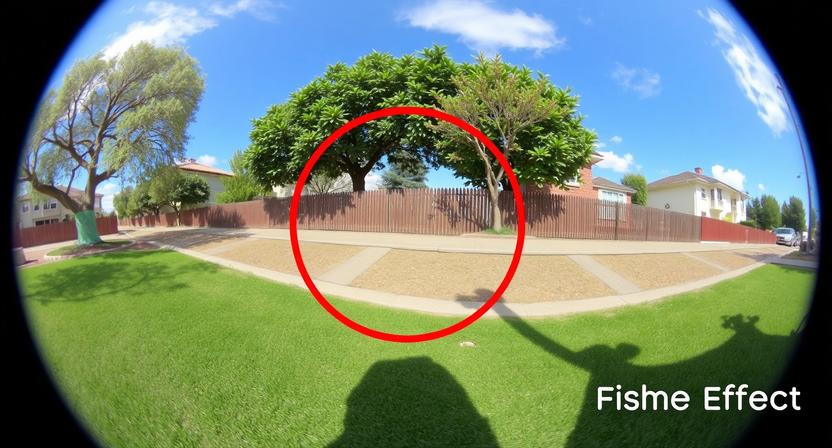
Fisheye technology is not perfect.
The same optical design that gives the camera its enormous field of view can also create distortion.
Straight lines near the edges may appear curved.
People or objects positioned at the far edges of the image may look stretched or smaller than expected.
This can become important when you need to identify a person’s face or read a license plate.
That is why camera placement, resolution, lens quality, and software correction matter.
A high-resolution Fisheye Camera with effective dewarping can provide a much more useful surveillance experience than a low-quality wide-angle camera.
Fisheye Camera Resolution Matters

Wide coverage is impressive, but coverage alone is not enough.
Imagine spreading a low-resolution image across a huge area.
You may see that something happened, but identifying the details could be difficult.
For this reason, resolution should be considered carefully.
Higher-resolution sensors can provide more pixels across the scene, which may help preserve useful details after digitally cropping or dewarping sections of the image.
However, higher resolution does not automatically guarantee perfect identification.
Lighting, lens quality, compression, viewing distance, camera placement, and subject movement all affect real-world performance.
Night Vision and Low-Light Performance

Security does not stop when the sun goes down.
If you plan to use a Fisheye Camera at night, pay close attention to its low-light capabilities.
Some models include infrared illumination or advanced image processing to improve nighttime visibility.
Others may perform better in environments with existing lighting.
Before purchasing a camera, consider the actual lighting conditions of the installation area.
A camera that performs beautifully inside a brightly lit office may not deliver the same results in a dark warehouse.
Is a Fisheye Camera Worth It?
For the right application, absolutely.
A Fisheye Camera can provide several important benefits:
- Extremely wide coverage
- Reduced blind spots
- Potentially fewer cameras
- Excellent situational awareness
- Flexible viewing options
- Useful panoramic surveillance
- Suitable for many indoor environments
However, it is not a universal replacement for every security camera.
If you need highly detailed long-distance surveillance, a traditional telephoto camera or PTZ Camera may be more appropriate.
If you need broad coverage inside an open room, a Fisheye Camera may be one of the smarter options.
Fisheye Camera Installation Tips

Getting the best performance is about more than simply mounting the camera on a ceiling.
Choose a position that provides an unobstructed view.
For ceiling installation, a central location can often provide excellent panoramic coverage.
Avoid placing the camera behind large objects or close to structures that block part of the lens.
Also consider the height.
Installing a camera too high may make faces harder to identify, while installing it too low may expose it to tampering or create unnecessary obstructions.
The goal is to balance coverage, detail, security, and accessibility.
Fisheye Camera: The Future of Wide-Area Surveillance?
Security technology continues to evolve.
Modern surveillance is no longer simply about recording video. It is increasingly about understanding what is happening within a monitored environment.
Fisheye Cameras fit naturally into this trend because they provide a broad visual picture from a single location.
When combined with high-resolution sensors, intelligent analytics, motion detection, dewarping, and network-based video management, a Fisheye Camera can become much more than a simple surveillance device.
It can serve as a powerful wide-area monitoring tool.
And that brings us back to the original question:
Can one camera really see what several conventional cameras might miss?
In the right environment, the answer can be surprisingly close to yes.
Final Thoughts
A Fisheye Camera is designed for one thing above all else: seeing more of the environment at once.
Its ultra-wide lens makes it particularly useful for stores, offices, lobbies, warehouses, schools, and other locations where broad coverage is important.
Its biggest advantage is also its biggest challenge. The extremely wide field of view can introduce distortion and reduce the apparent size of distant subjects.
That is why choosing the right resolution, lens quality, mounting position, lighting performance, and dewarping technology is essential.
And if you need both broad awareness and powerful zoom capability, combining a Fisheye Camera with a PTZ Camera may provide an even more complete surveillance solution.
The real power of a Fisheye Camera isn’t simply that it records a huge image.
It’s that it can help you see the moment you might otherwise have missed.