
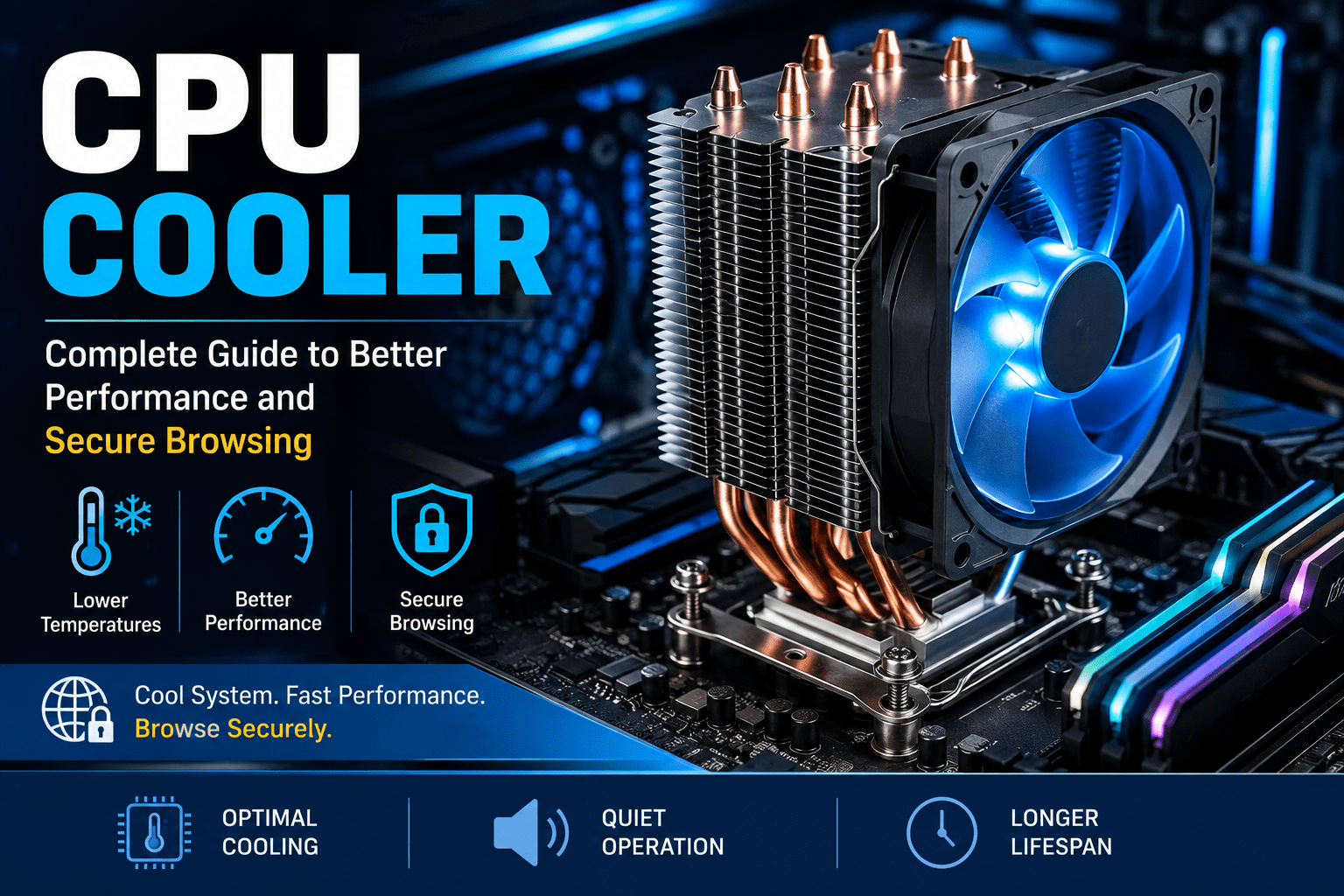
A CPU cooler is one of the most important components in a modern computer. The central processing unit, or CPU, performs millions or even billions of calculations every second, and this activity generates heat. If that heat is not removed effectively, the processor can become too hot, reduce its performance, or potentially suffer long-term damage. A properly selected CPU cooler helps maintain safe temperatures and allows your computer to operate smoothly.
CPU cooling is especially important for people who use their computers for gaming, video editing, programming, multitasking, and other demanding workloads. It can also matter during everyday activities such as browsing the internet with Secure Browsers, because modern browsers can use significant CPU resources when handling multiple tabs, web applications, videos, and security features.
In this guide, we will explain what a CPU cooler is, how it works, the main types available, how to choose one, and how proper cooling can contribute to a faster and more reliable computer.
What Is a CPU Cooler?
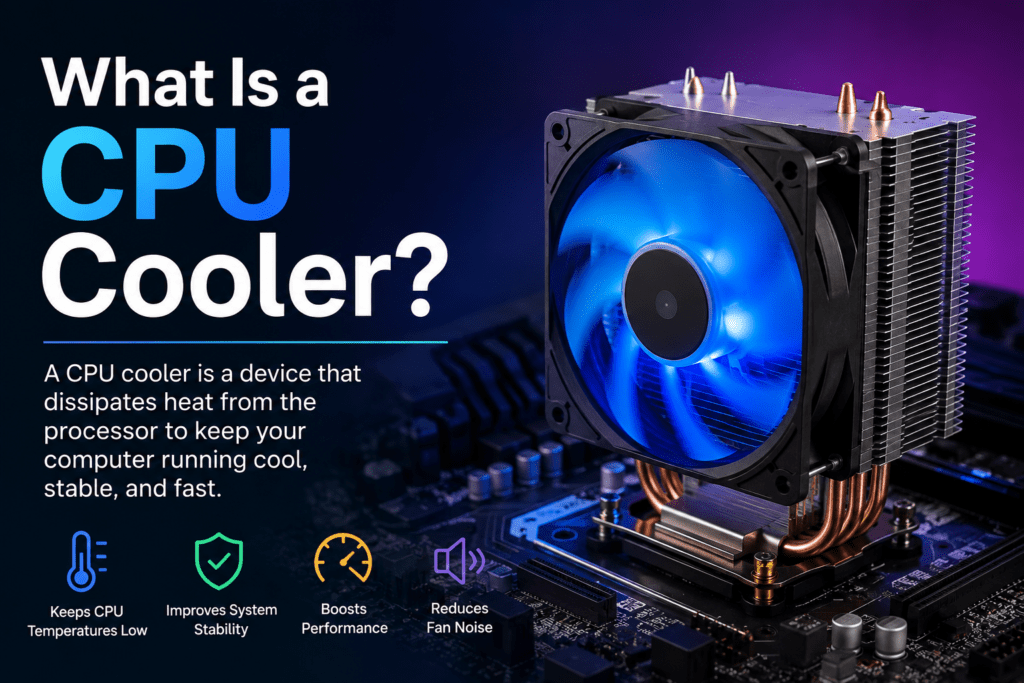
A CPU cooler is a cooling device designed to remove heat from a computer’s processor.
When the CPU operates, electrical energy is converted into computational activity and heat. The cooler transfers this heat away from the processor and releases it into the surrounding air.
Most CPU cooling systems contain several important parts, including a contact plate, heatsink, thermal interface material, and fan. More advanced systems may use liquid coolant instead of relying entirely on air.
The primary purpose of a CPU cooler is to keep processor temperatures within a safe operating range. When temperatures remain controlled, the CPU can maintain consistent performance without frequently reducing its clock speed because of excessive heat.
Why Is CPU Cooling Important?
Modern processors are designed to protect themselves from overheating, but relying on thermal protection is not an ideal strategy. When a CPU reaches excessive temperatures, the system may automatically reduce processor speed. This behavior is known as thermal throttling.
Thermal throttling can cause applications to become slower and games to experience performance drops. In extreme situations, a computer may restart or shut down to prevent hardware damage.
A good CPU cooler provides several benefits:
- Helps maintain stable CPU temperatures
- Reduces the risk of thermal throttling
- Supports consistent computer performance
- Can improve system reliability
- Helps manage heat during demanding workloads
- May allow compatible processors to operate at higher performance levels
Cooling is therefore not simply an optional feature for enthusiasts. It is an important part of building or maintaining a dependable computer.
Types of CPU Coolers
There are two primary categories of CPU coolers: air coolers and liquid coolers. Both approaches can provide excellent results when properly matched to the processor.
Air CPU Coolers
Air coolers are among the most common cooling solutions. They normally consist of a metal heatsink, heat pipes, and one or more fans.
The heatsink contains many fins that increase the surface area available for transferring heat. Heat pipes move heat from the CPU contact area into the heatsink, while the fan pushes air through the fins.
Air coolers are popular because they are generally straightforward, reliable, and easy to maintain. They are available in compact designs for smaller computers as well as large tower-style models for high-performance systems.
Liquid CPU Coolers
Liquid CPU coolers use a liquid-based cooling system to transfer heat away from the processor. A typical all-in-one liquid cooler includes a CPU water block, pump, tubes, radiator, and fans.
The liquid absorbs heat from the CPU block and carries it to the radiator. Fans then move air through the radiator to release that heat.
Liquid coolers can provide strong thermal performance and are particularly popular among gaming PC builders and enthusiasts. However, they are often more expensive and involve more components than conventional air coolers.
CPU Cooler and Processor Compatibility
Before buying a CPU cooler, compatibility should be one of your first considerations. Different processors use different socket designs, and the cooler must support the appropriate socket.
You should check the processor manufacturer’s specifications and the cooler manufacturer’s compatibility list. You should also consider the physical dimensions of the cooler.
A large tower cooler may provide excellent cooling but could interfere with tall RAM modules or fail to fit inside a compact PC case. Similarly, a liquid cooler needs a case with the appropriate radiator mounting location.
Compatibility involves more than just the CPU socket. Check:
- CPU socket support
- Cooler height
- RAM clearance
- Case dimensions
- Radiator support
- Fan clearance
- Power connections
Taking these factors into account before purchasing can prevent installation problems.
Choosing the Right CPU Cooler
The best CPU cooler depends on how you use your computer. A basic desktop used for email, documents, and light browsing may not need an expensive cooling system.
For everyday computing, a capable air cooler can often provide more than enough performance. Users who run demanding applications, play modern games, edit videos, or perform heavy computational tasks may benefit from a more powerful cooling solution.
Enthusiasts should also consider the CPU’s power consumption and performance characteristics. A high-end processor can produce considerably more heat than an entry-level model.
Noise is another important factor. Some users prefer extremely quiet computers, while others are willing to accept additional fan noise in exchange for maximum cooling performance.
The Role of Thermal Paste
Thermal paste, also called thermal compound, is placed between the CPU and cooler’s contact surface. Its purpose is to fill tiny imperfections between the two surfaces.
Although the metal surfaces may appear smooth, microscopic gaps can prevent perfect contact. Thermal paste improves heat transfer by filling those spaces.
Many CPU coolers include thermal paste already applied to the contact surface. If you install a cooler manually, follow the manufacturer’s instructions regarding paste application.
Too much or too little thermal paste can reduce the effectiveness of the thermal interface, so careful installation is important.
CPU Cooler and Computer Performance
A CPU cooler does not directly make a processor more powerful. Instead, it helps the CPU maintain the performance level it is designed to provide.
When a processor becomes excessively hot, modern CPUs can reduce their operating frequency. With effective cooling, the processor can maintain stable performance for longer periods.
This is particularly important during demanding workloads. For example, a user rendering a video may keep the CPU under heavy load for an extended period. A strong cooling system can help prevent temperature-related performance reductions.
The same principle applies to gaming, software development, data processing, and multitasking.
How CPU Cooling Relates to Secure Browsers
At first, CPU Cooler and Secure Browsers may seem like completely different topics, but they are connected through overall computer performance.
Secure Browsers are designed to provide users with additional privacy and security protections while browsing the web. Depending on the browser and the websites being accessed, these features may involve processes such as encryption, content filtering, tracking protection, sandboxing, and secure connections.
Modern web pages can also contain video, animations, interactive applications, advertisements, and other demanding elements. If you regularly keep many tabs open, your CPU may work harder.
When browser activity increases processor usage, the CPU produces additional heat. An effective CPU cooler helps manage this heat and supports stable system performance.
This does not mean that a CPU cooler makes a browser more secure. Security depends on the browser’s architecture, updates, privacy controls, website security, operating system protections, and user behavior. Instead, the connection is that both cooling and secure browsing contribute to a more reliable computing experience.
Keeping Your CPU Cooler Clean
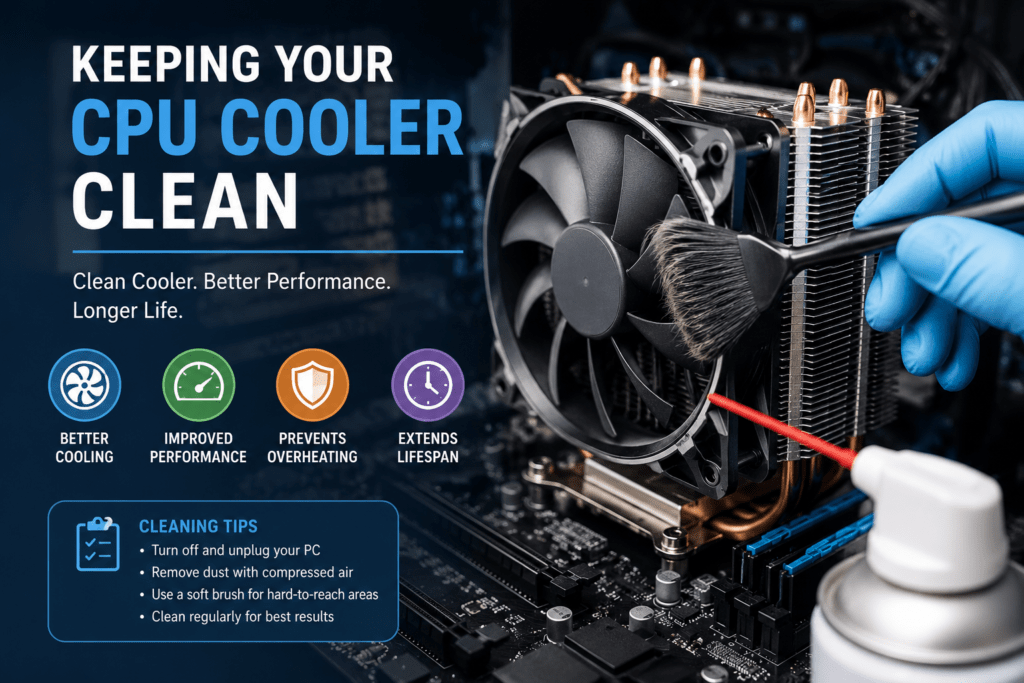
Dust is one of the biggest enemies of computer cooling. Over time, dust can accumulate on heatsink fins, fans, filters, and other components.
When dust restricts airflow, the cooling system may become less effective. Fans may also have to spin faster, increasing noise.
Regularly cleaning your computer can help maintain proper airflow. Before cleaning, shut down the computer and disconnect it from power. Use appropriate cleaning equipment and avoid damaging delicate components.
Good airflow inside the case is also important. Ideally, cool air should enter the case while warm air is efficiently exhausted.
Signs of Poor CPU Cooling
Several symptoms may indicate that your CPU cooling system needs attention.
One common sign is unusually high CPU temperature. Another is unexpected performance reduction during demanding workloads. You may also notice fans running at high speeds or unusual fan noise.
Other warning signs can include:
- Random system shutdowns
- Unexpected restarts
- Performance drops
- Excessive fan noise
- Very high processor temperatures
- Poor performance during sustained workloads
If these symptoms occur, inspect the cooler, fans, thermal paste, airflow, and CPU temperatures.
Airflow Matters
A CPU cooler cannot work effectively if the computer case has poor airflow. The cooler needs access to reasonably cool air so that it can transfer heat away from the CPU.
Case fans should be arranged to create a balanced airflow pattern. Front or bottom fans commonly bring cool air into the case, while rear or top fans remove warm air.
Cable management can also help. Organized cables can reduce airflow obstruction and make maintenance easier.
Should You Upgrade Your CPU Cooler?
Upgrading your CPU cooler can be worthwhile if your existing cooler struggles with processor temperatures, produces excessive noise, or cannot adequately handle your workload.
An upgrade may also be useful when installing a more powerful CPU. Before purchasing, check your case dimensions, processor socket, and cooler compatibility.
However, buying the most expensive cooler is not always necessary. A properly matched cooler can provide excellent performance without excessive cost.
Final Thoughts
A CPU Cooler is an essential component for maintaining safe temperatures and consistent processor performance. Whether you use a computer for everyday browsing, gaming, professional applications, or demanding workloads, effective cooling can improve reliability and help your CPU operate efficiently.
Air coolers offer a practical and dependable solution for many users, while liquid coolers can provide powerful thermal performance for high-end systems. Choosing the right cooler requires attention to processor compatibility, case size, noise, thermal performance, and installation requirements.
The relationship between CPU cooling and Secure Browsers is also worth understanding. Secure browsing focuses on protecting your privacy and security online, while effective CPU cooling helps your computer handle its workload reliably. When combined with a well-maintained operating system, updated software, good security practices, and adequate hardware cooling, these technologies contribute to a smoother and more dependable computing experience.
Whether you are building a new PC or upgrading an existing one, do not overlook the importance of CPU cooling. A properly selected and maintained cooler can help your computer stay cooler, quieter, and more stable for years to come.