
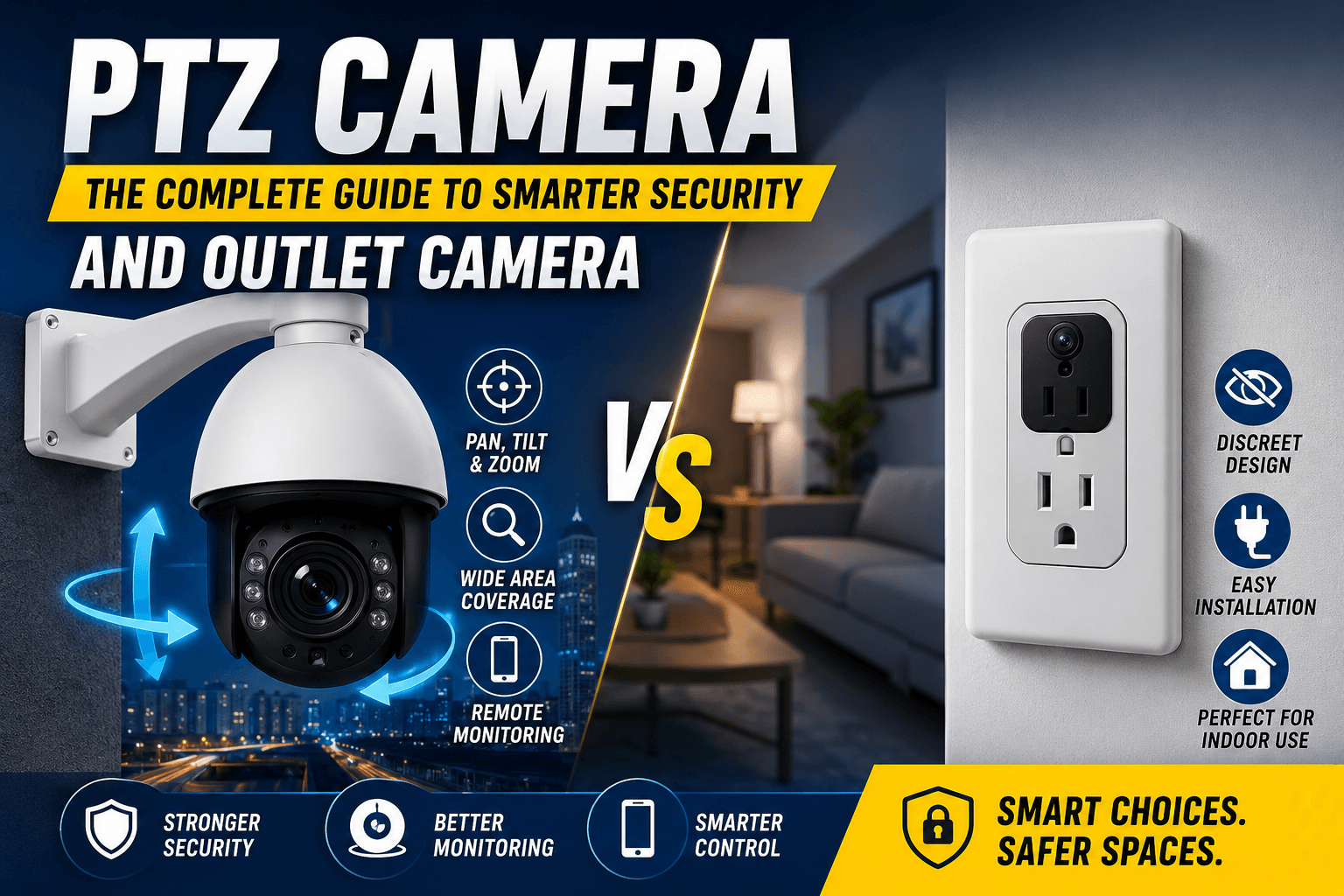
Security cameras have become an essential part of protecting homes, offices, stores, warehouses, schools, parking lots, and other properties. But with so many camera options available, choosing the right one can feel confusing. One camera type that stands out for its flexibility and wide-area coverage is the PTZ camera.
A PTZ camera can Pan, Tilt, and Zoom, allowing users to move the camera in different directions and focus on specific areas. Unlike a fixed security camera that continuously watches one position, a PTZ camera can cover a much larger area and provide detailed views when something important happens.
But what if you need a camera that is less noticeable and designed to blend into its surroundings? That is where an outlet camera can become an interesting alternative. Although PTZ cameras and outlet cameras serve different purposes, understanding both can help you choose the right surveillance solution for your property.
What Is a PTZ Camera?
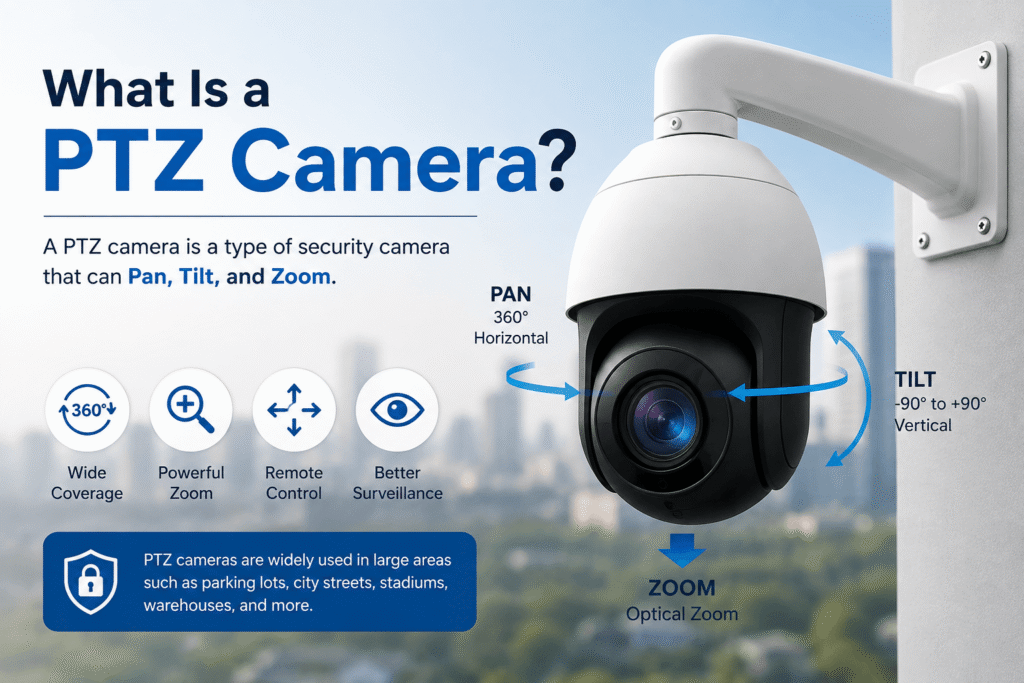
A PTZ camera is a motorized security camera that can move horizontally, vertically, and closer to a subject. The name PTZ comes from three functions:
- Pan: Moves the camera from side to side.
- Tilt: Moves the camera up and down.
- Zoom: Brings distant objects closer for a more detailed view.
These functions allow one PTZ camera to monitor a large area and change its viewing angle whenever necessary.
Many modern PTZ cameras can be controlled through a computer, smartphone, security recorder, or dedicated controller. Some models also include automatic tracking, night vision, motion detection, presets, and high-resolution video.
Why Are PTZ Cameras So Popular?
The biggest advantage of a PTZ camera is flexibility. A traditional fixed camera may provide excellent video, but its viewing direction remains limited. A PTZ camera can change its position whenever you need a different perspective.
Imagine monitoring a large parking lot. Instead of installing a separate fixed camera for every section, a PTZ camera can scan different areas and zoom in when it detects activity.
This makes PTZ cameras particularly useful for:
- Parking lots
- Warehouses
- Shopping centers
- School campuses
- Large homes
- Construction sites
- Industrial facilities
- Sports grounds
- Building entrances
- Outdoor commercial areas
Key Features of a PTZ
Not every PTZ camera has the same capabilities. Before purchasing one, it is important to understand the features that can make a major difference.
1. Pan and Tilt Movement
The motorized pan and tilt mechanism allows the camera to move across a wide viewing area. Some models can rotate almost completely around their mounting point, making them useful for monitoring large spaces.
2. Optical Zoom
Zoom is one of the most valuable features of a PTZ camera. Optical zoom uses the camera’s lens to magnify a subject while maintaining better image quality than digital zoom.
For example, if someone is standing far away near a gate, optical zoom can help you obtain a clearer view of that person or object.
3. Night Vision
Many PTZ cameras include infrared night vision. This allows the camera to monitor areas in low-light or nighttime conditions.
However, night-vision performance varies between models. If nighttime surveillance is important, check the camera’s infrared range and low-light specifications before buying.
4. Motion Tracking
Advanced PTZ cameras can automatically follow moving objects or people. This feature can be especially useful in large outdoor areas where subjects frequently move from one location to another.
5. Preset Positions
Preset positions allow you to save specific viewing angles. Instead of manually moving the camera every time, you can select a saved position and the camera quickly moves there.
For example, you could create presets for:
- Front gate
- Parking area
- Main entrance
- Backyard
PTZ Camera vs. Fixed Security Camera

camera offers movement, while a conventional fixed camera generally watches one direction.
A fixed camera can be an excellent choice when you need continuous monitoring of one specific location. PTZ cameras are better suited to situations where you need to inspect multiple areas.
However, there is an important consideration: when a PTZ camera turns toward another location, it may temporarily stop showing the previous area.
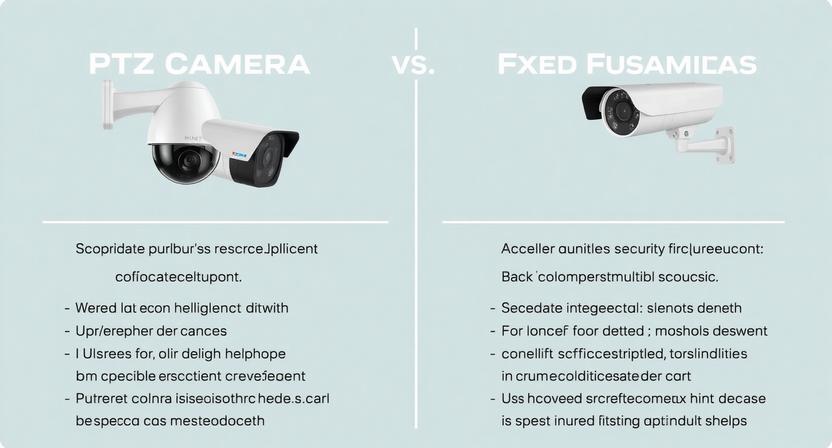
For this reason, larger security systems sometimes combine PTZ cameras with multiple fixed cameras. The fixed cameras provide continuous coverage while the PTZ camera provides flexible monitoring and close-up views.
PTZ Camera vs. Outlet Camera
An outlet camera has a very different design philosophy from a PTZ camera.
A PTZ camera is generally designed to provide wide-area monitoring, movement, and zoom capability. An outlet camera is designed to fit into or resemble an electrical outlet, allowing it to blend into a wall or existing environment.
This makes the two cameras suitable for different surveillance situations.
The right choice depends on your security objective. If you need to monitor a large property and inspect different locations, a PTZ camera can be a strong option. If you need a compact camera that integrates into an indoor environment, an outlet camera may be more suitable.
Where Should You Install a PTZ Camera?
Location plays a major role in PTZ camera performance. Installing the camera at a higher position can provide a broader view and reduce obstructions.
Good installation locations may include:
- Building corners
- Parking-lot poles
- Warehouse ceilings
- Entrance areas
- Security towers
- Large outdoor walls
Before installation, consider the camera’s field of view, lighting conditions, power supply, network connection, and weather resistance.
For outdoor installations, choose a model designed specifically for outdoor use. Exposure to rain, dust, extreme temperatures, or direct sunlight can affect equipment that is not properly protected.
How Does a PTZ Camera Work?
A PTZ camera combines a motorized mechanism with an imaging system and control software.
When you send a command to pan or tilt, internal motors move the camera toward the selected direction. When you activate zoom, the lens changes its focal length to make a distant subject appear closer.
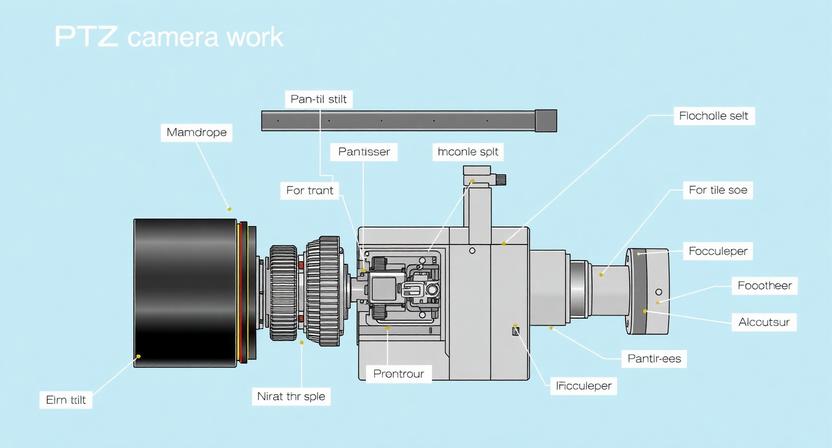
Many network-based PTZ cameras connect to an NVR, computer, or mobile application. This allows users to view live footage and control camera movement remotely.
PTZ cameras offer several important benefits.
Wide Coverage
One PTZ camera can monitor a much larger area than many fixed cameras, depending on the installation and camera specifications.
Remote Control
Network-connected models can often be controlled remotely, allowing users to change the camera’s viewing direction without physically touching the equipment.
Detailed Viewing
Optical zoom can provide valuable close-up views of distant objects.
Automatic Monitoring
Some models can automatically move between preset positions or track activity.
Flexible Security
Because the camera can change direction, it can adapt to changing surveillance needs.
Limitations You Should Know
Despite their impressive features, PTZ cameras are not perfect.
The first limitation is cost. High-quality PTZ cameras with powerful optical zoom, advanced tracking, and durable outdoor construction can be more expensive than basic fixed cameras.
Another limitation is coverage continuity. A PTZ camera cannot look in every direction simultaneously. When it moves toward one area, another area may temporarily be outside its view.
Installation can also require careful planning because the camera needs reliable power and, depending on the system, network connectivity.
For maximum security, combining a PTZ camera with fixed cameras can often provide better overall coverage.
How to Choose the Right PTZ Camera
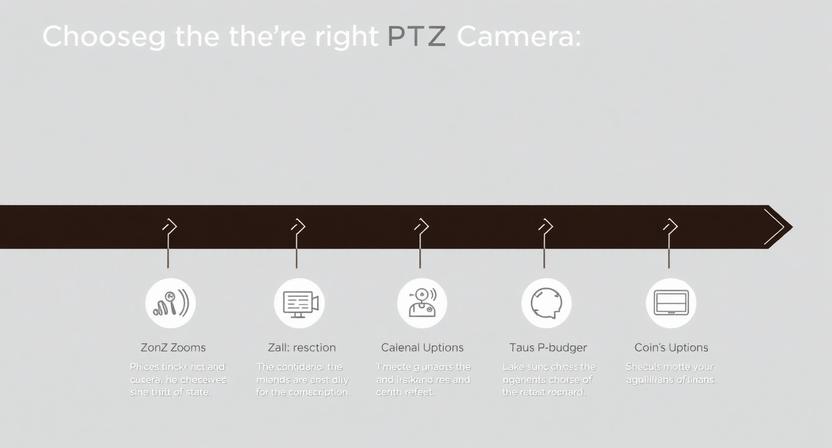
Before purchasing a PTZ camera, consider these factors:
Resolution: Choose a resolution appropriate for the level of detail you need.
Optical zoom: If you need to monitor distant subjects, prioritize strong optical zoom.
Night vision: Check infrared performance if nighttime surveillance is important.
Weather resistance: Outdoor cameras should have suitable protection against weather and dust.
Connectivity: Decide whether you need Ethernet, Wi-Fi, or another connection method.
Storage: Determine whether recordings will be stored on an NVR, memory card, cloud service, or another storage system.
Tracking: If moving subjects are important, look for reliable automatic tracking features.
Is a PTZ Camera Better Than an Outlet Camera?
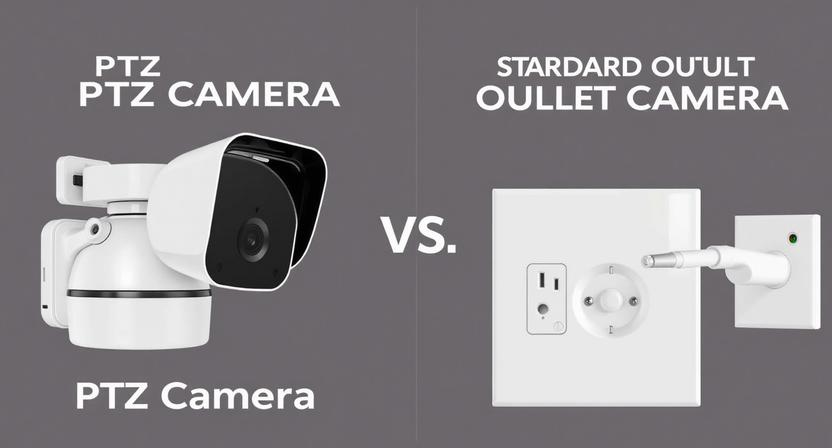
There is no universal winner because the cameras are designed for different purposes.
Choose a PTZ camera when you need wide-area coverage, remote movement, optical zoom, or monitoring of large spaces.
Consider an outlet camera when compact size, simple indoor placement, and a design that blends with the surroundings are more important.
In some properties, both types can work together. A PTZ camera can monitor a large outdoor area, while an outlet camera can provide additional indoor coverage.
This layered approach can create a more comprehensive surveillance system.
Final Thoughts

A PTZ camera can be a powerful solution for anyone who needs flexible, wide-area security monitoring. Its ability to pan, tilt, and zoom gives users much more control than a conventional fixed camera.
However, the best security camera is not always the most feature-packed model. Your property, monitoring requirements, installation location, budget, and privacy considerations should determine your choice.
If you need broad coverage and the ability to follow or inspect activity, a PTZ camera is worth considering. If your priority is a compact indoor camera that integrates into an electrical-outlet environment, an outlet camera may offer a different and useful approach.
Understanding the strengths and limitations of both can help you build a smarter security setup instead of simply choosing a camera based on specifications alone.