
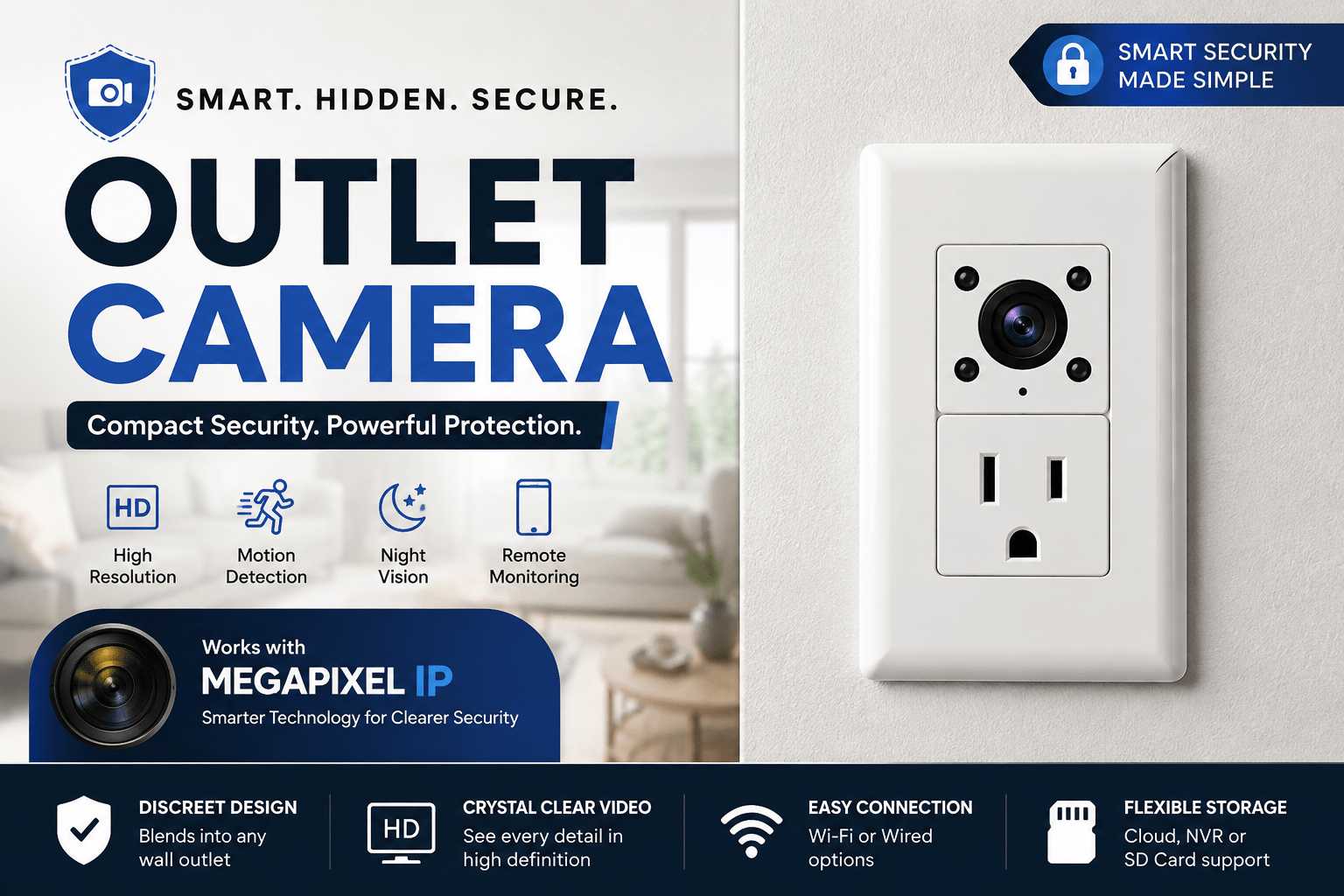
Security cameras are now essential for protecting homes, offices, stores, schools, and businesses—but what if you could add reliable surveillance without installing a large, obvious camera? An Outlet Camera offers a compact and clever approach to security, blending into everyday surroundings while providing valuable monitoring. But is its small design really enough to deliver clear, dependable protection? Let’s explore its features, benefits, and how it compares with advanced Megapixel IP cameras.
When choosing a security camera, however, appearance is only one consideration. Image quality, network connectivity, night vision, storage, motion detection, privacy, and installation requirements are equally important. This is where megapixel IP technology can make a major difference. A high-resolution IP camera can provide sharper video and more useful details when monitoring an area.
In this guide, we will explain what an outlet camera is, how it works, what features to consider, and how it compares with modern megapixel IP security cameras.
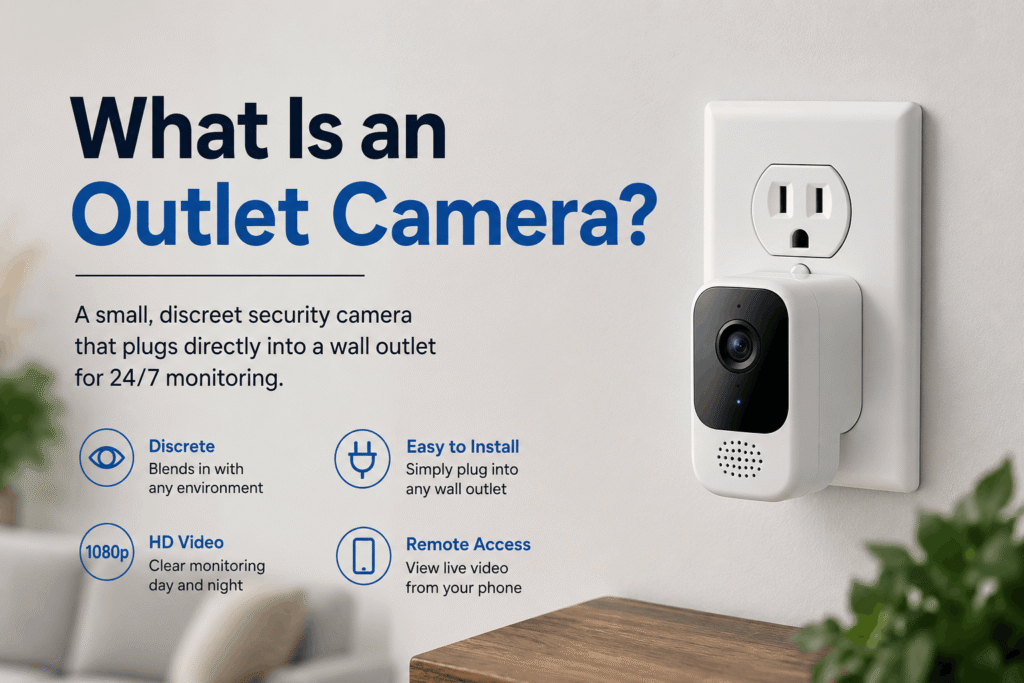
What Is an Outlet Camera?
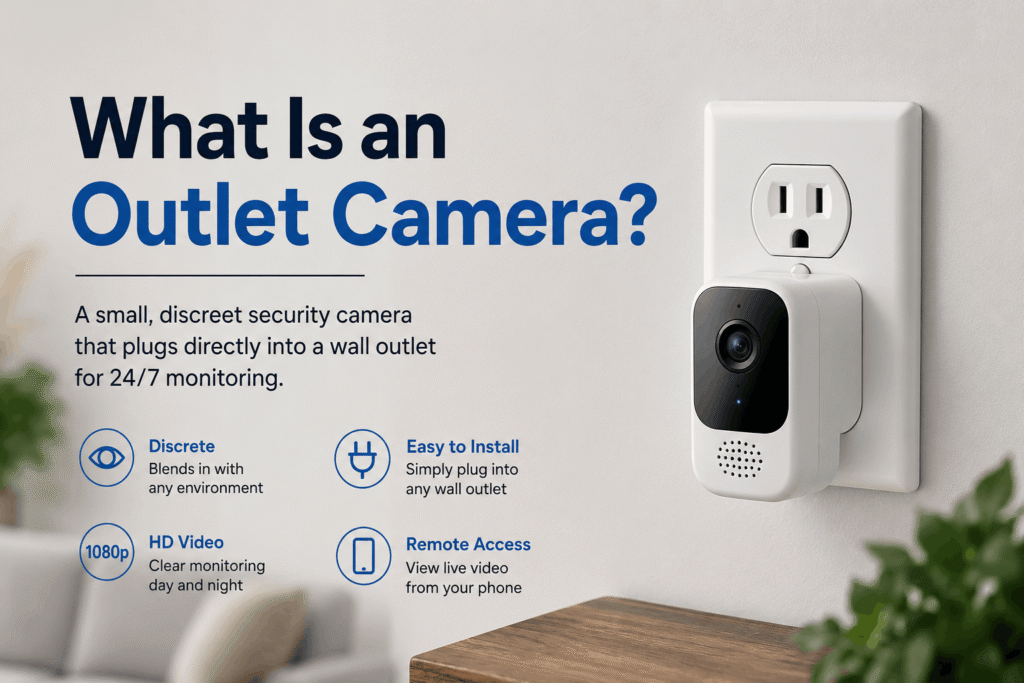
An outlet camera is a compact surveillance camera designed to resemble or fit into an electrical outlet or similar wall-mounted device. Depending on the design, the camera may be integrated into an outlet-style housing while providing video monitoring through a small lens.
The main attraction of this type of camera is its compact appearance. Instead of installing a large traditional security camera, users may choose a smaller design that takes up less visual space.
Outlet-style cameras can be used for monitoring specific areas such as entrances, hallways, offices, retail spaces, and other locations where a compact camera is appropriate. However, users should always follow local laws and respect privacy when installing surveillance equipment.
How Does an Outlet Camera Work?
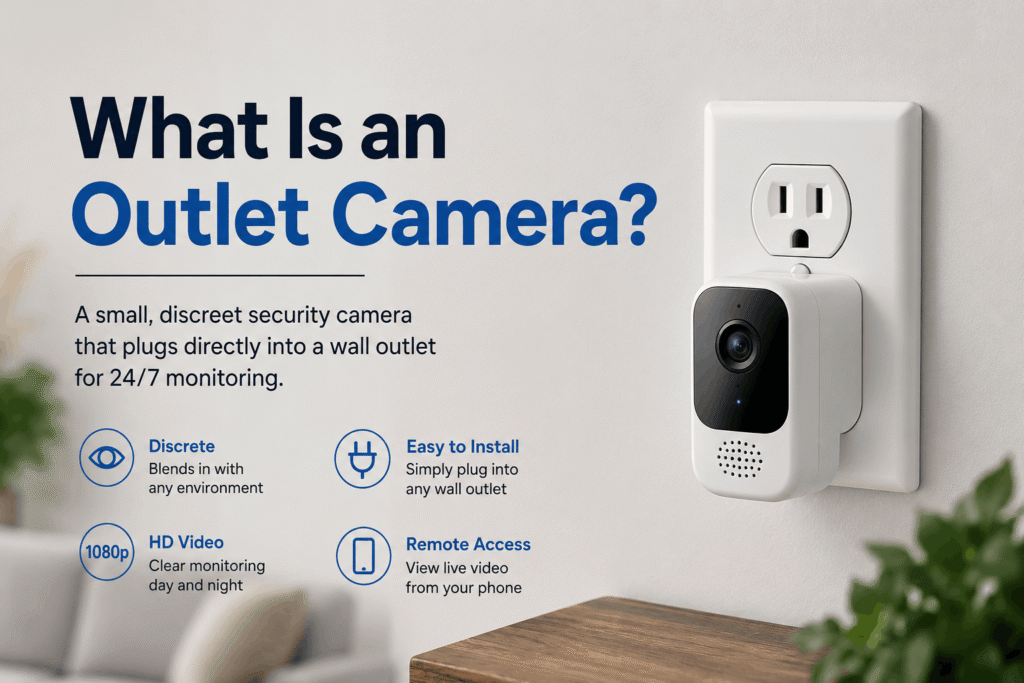
The basic operation is similar to many other digital security cameras. A small image sensor captures video through the lens and sends the information to an internal storage system, network connection, or compatible monitoring device.
Some models use Wi-Fi, while others may use wired network connections. Depending on the model, video can be stored on a memory card, network video recorder, local computer, or cloud-based service.
Many modern cameras also include motion detection. When movement is detected, the camera can trigger recording or send an alert to a connected smartphone. This can reduce unnecessary recordings and make important events easier to find.
Outlet Camera vs. Megapixel IP Camera
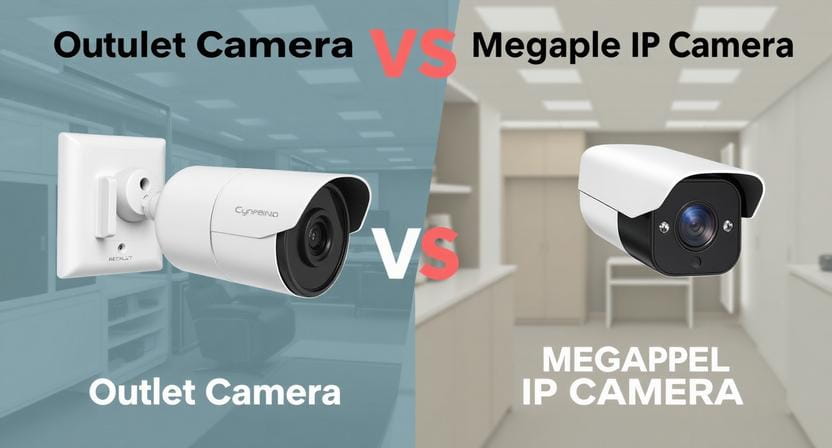
One of the most important differences between an outlet camera and a megapixel IP camera is the emphasis of each design.
An outlet camera generally focuses on compactness and discreet installation. A megapixel IP camera focuses more heavily on digital image quality, network connectivity, and surveillance performance.
A megapixel IP camera captures video using a digital image sensor with a resolution measured in megapixels. Higher resolution can provide greater detail, which is useful when identifying objects, reading signs, or reviewing recorded footage.
For example, a 2-megapixel camera can produce a Full HD-class image, while cameras with 4MP, 5MP, 8MP, or higher resolutions can provide progressively more detail. Actual image quality also depends on the sensor, lens, lighting, compression, and camera processing.
Therefore, someone choosing an outlet camera should not judge the device only by its small size. If image clarity is the primary goal, a quality megapixel IP camera may be the better choice.
Why Megapixel Resolution Matters
Resolution determines how much visual information a camera can capture. Higher resolution generally means that an image contains more pixels, allowing smaller details to remain visible.
This can be particularly useful in large rooms, entrances, parking areas, retail stores, and other locations where details may appear small in the video frame.
However, higher megapixel counts do not automatically guarantee excellent video. A camera with a high resolution but a poor image sensor or weak lens may perform worse than a well-designed camera with a lower resolution.
When comparing cameras, consider the complete imaging system rather than focusing only on the megapixel number.
Important Features to Look For
If you are considering an outlet camera or megapixel IP camera, several features deserve attention.
1. Image Quality
Image quality should be one of your first considerations. Look for a camera with an appropriate resolution, good dynamic range, and reliable performance in different lighting conditions.
For general indoor monitoring, Full HD may be sufficient. For applications requiring more detail, a 4MP, 5MP, or 8MP megapixel IP camera may be more suitable.
2. Night Vision
A security camera should perform well after dark. Infrared LEDs are commonly used to provide black-and-white night vision.
Before purchasing a camera, check its effective night-vision range and consider the amount of ambient light available in the installation area.
3. Wide-Angle Coverage
A wide-angle lens can cover more of a room with a single camera. This can be useful in smaller spaces where installing several cameras is unnecessary.
However, extremely wide lenses can introduce distortion around the edges. The best choice depends on the size and layout of the area being monitored.
4. Motion Detection
Motion detection can help reduce unnecessary recordings. When the camera detects movement, it can begin recording or send an alert.
Advanced systems may allow users to adjust detection zones or sensitivity levels. These settings can help reduce false alerts caused by moving curtains, shadows, or other harmless activity.
5. Network Connectivity
Many megapixel IP cameras connect to a network through Ethernet or Wi-Fi. Wired connections can provide stable communication, while Wi-Fi can simplify installation in locations where running network cables is difficult.
Before choosing a Wi-Fi camera, make sure the wireless signal is strong enough at the installation location.
6. Storage Options
Storage is another important factor. Some cameras support microSD cards, while larger surveillance systems may use a network video recorder.
Cloud storage can provide remote access and off-site backups, but it may require a subscription. Local storage can offer more control but may require additional hardware.
Advantages of an Outlet Camera
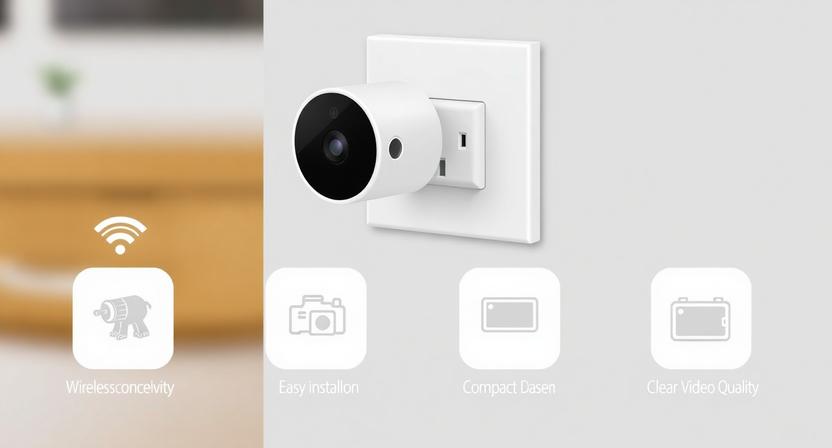
An outlet camera can provide several practical advantages. Its compact design can make it suitable for locations where a conventional camera would look too large.
It may also be convenient for users who want to monitor a small indoor area without installing a large surveillance device.
Another advantage is that some outlet-style designs can integrate easily into existing indoor environments. However, the specific installation method depends on the product, electrical configuration, and local safety requirements.
Advantages of Megapixel IP Camera
A megapixel IP camera can offer several advantages for serious surveillance applications.
First, higher resolution can provide more detailed footage. Second, IP connectivity makes it easier to integrate multiple cameras into a networked surveillance system.
Many IP cameras also support features such as remote viewing, motion alerts, digital zoom, user management, and integration with network video recorders.
For businesses and larger properties, these capabilities can make megapixel IP cameras a more flexible long-term surveillance solution.
Where Can These Cameras Be Used?

Outlet-style cameras may be appropriate for certain indoor monitoring applications, including home offices, hallways, small rooms, and other areas where a compact design is useful.
Megapixel IP cameras are commonly suited to broader applications. They can be used in homes, offices, retail stores, warehouses, schools, parking areas, and commercial buildings.
The best camera depends on the environment. A small indoor space may not require the same equipment as a large warehouse or outdoor property.
Installation and Privacy Considerations
Security cameras should be installed responsibly. Before installing an outlet camera, verify that the device is suitable for the electrical environment and follow the manufacturer’s installation instructions.
Electrical work can be dangerous. If installation requires modifying electrical wiring, use a qualified professional rather than attempting unsafe modifications yourself.
Privacy is equally important. Avoid placing cameras in locations where people have a reasonable expectation of privacy. For businesses, clearly communicate surveillance policies when required by applicable laws and regulations.
How to Choose the Right Camera:

Start by identifying what you actually need to monitor. Consider the size of the area, lighting conditions, required image detail, network availability, storage needs, and budget.
If compactness is your main priority, an outlet camera may be worth considering. If detailed video, network connectivity, and scalability are more important, a megapixel IP camera may be a stronger choice.
You should also compare sensor quality, lens specifications, night vision, motion detection, storage, mobile applications, security features, and manufacturer support.
Final Thoughts

An outlet camera can be an interesting option for compact indoor surveillance, particularly when a small and unobtrusive design is desirable. However, users should look beyond appearance and evaluate image quality, reliability, connectivity, storage, privacy, and installation requirements.
For users who need sharper footage and advanced network capabilities, megapixel IP technology offers a powerful alternative. Higher resolution can capture more detail, while IP connectivity can make it easier to build and manage a modern surveillance system.
Ultimately, the right camera depends on your specific security requirements. Choose a camera based on the area you need to monitor, the level of detail you require, and the features that will make your surveillance system reliable and practical.