
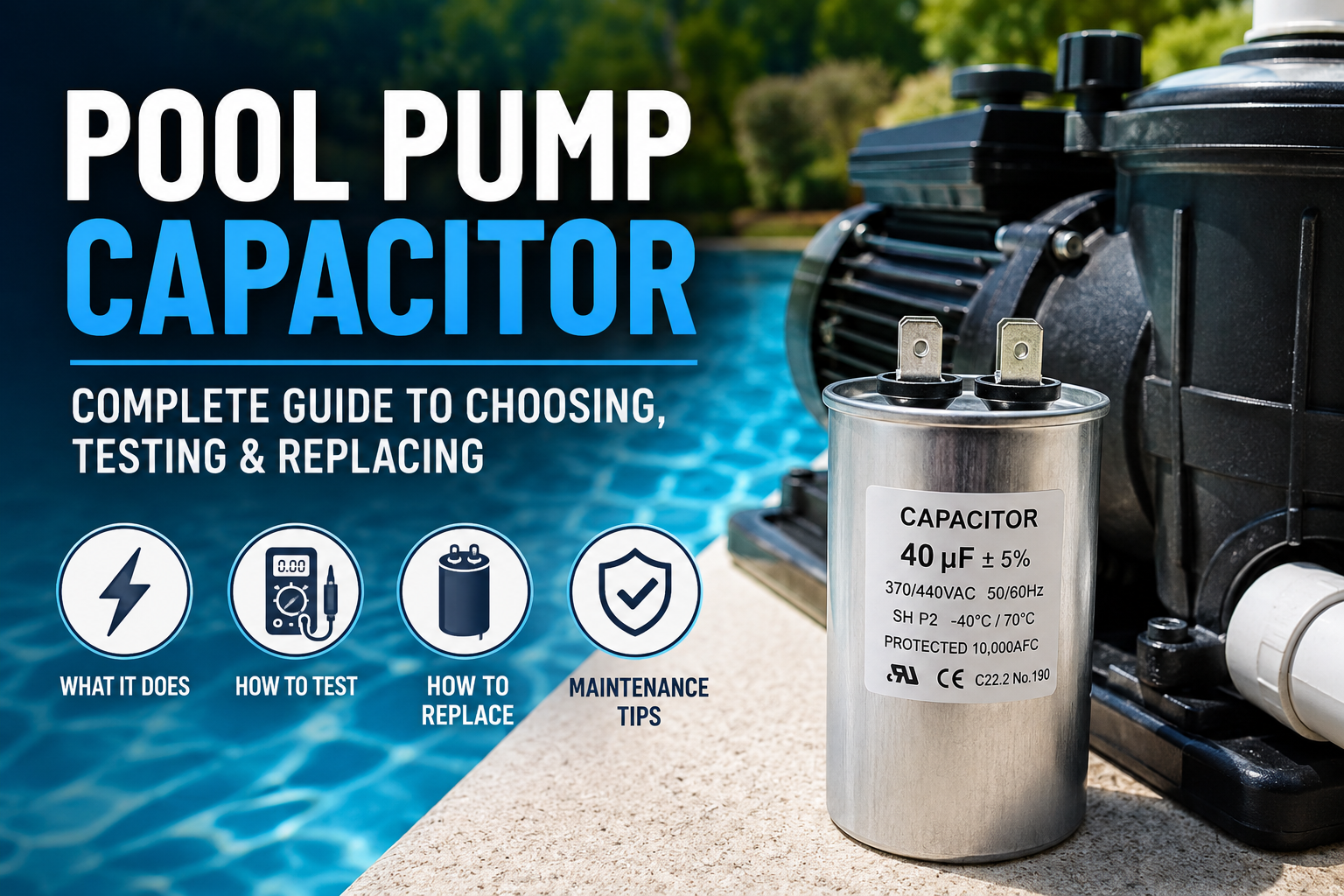
A pool pump capacitor is a small but essential electrical component that helps a pool pump motor start and run properly. When a capacitor begins to fail, your pool pump may struggle to start, make unusual noises, trip the circuit breaker, or stop working altogether. Understanding what a pool pump capacitor does, how to recognize failure, and when to replace it can help keep your pool circulation system operating efficiently.
Whether you are a homeowner maintaining your swimming pool or simply trying to understand why your pump is not working, this guide explains everything you need to know about pool pump capacitors.
What Is a Pool Pump Capacitor?
A pool pump capacitor is an electrical component used with the motor that powers a swimming pool pump. It stores electrical energy and releases it when the motor needs assistance starting or maintaining its operation.
Most pool pump motors use either a start capacitor, a run capacitor, or a design that incorporates capacitor functions into the motor system. The exact setup depends on the pump and motor model.
The capacitor is especially important during startup. Pool pump motors can require a significant amount of energy to overcome resistance and begin rotating. The capacitor provides the additional electrical boost needed to get the motor turning.
Once the motor is operating, a run capacitor may continue helping the motor operate efficiently and maintain the appropriate electrical characteristics.
Why Is a Pool Pump Capacitor Important?
A pool pump is responsible for circulating water through the filtration system. It moves water from the pool, through the filter and other equipment, and back into the pool.
The pump motor needs to start reliably and operate smoothly to perform this job. A healthy capacitor helps the motor:
- Start properly
- Maintain consistent operation
- Produce the required starting torque
- Operate more efficiently
- Reduce certain types of motor stress
When the capacitor becomes weak or defective, the motor may not receive the electrical assistance it needs.
This can result in a pump that hums without starting, starts intermittently, or shuts down unexpectedly.
Signs of a Bad Pool Pump Capacitor
A failing capacitor can produce several noticeable symptoms. However, these symptoms can also be caused by other electrical or mechanical problems, so proper diagnosis is important.
1. The Pump Hums but Does Not Start
One of the most common signs of a capacitor problem is a humming motor that does not begin spinning.
The motor may be receiving power, but it may not have enough starting assistance to begin rotating. A defective capacitor is one possible cause.
2. The Pump Starts Slowly
A healthy pool pump motor should generally start without prolonged hesitation. If the motor takes unusually long to start or seems sluggish, the capacitor may be losing its ability to provide the necessary electrical boost.
3. The Motor Shuts Off
A defective capacitor can contribute to motor overheating or improper operation. If your pool pump repeatedly starts and then shuts down, the capacitor should be considered as part of the troubleshooting process.
However, overheating can also result from blocked airflow, mechanical problems, incorrect voltage, or other electrical faults.
4. The Circuit Breaker Trips
A bad capacitor can sometimes contribute to excessive current draw or motor problems that cause a circuit breaker to trip.
Do not automatically assume that the capacitor is responsible. Repeated breaker trips should be investigated carefully because they can indicate a more serious electrical problem.
5. Visible Damage to the Capacitor
Some failed capacitors show obvious physical damage. You may notice:
- Bulging ends
- Cracks
- Leaking material
- Burn marks
- Corrosion
- A damaged casing
A visibly damaged capacitor should not be used.
What Causes a Pool Pump Capacitor to Fail?
Pool pump capacitors do not last forever. Several factors can shorten their service life.
Heat
Pool pump motors can become warm during normal operation. Excessive heat, however, can accelerate capacitor deterioration.
Age
Capacitors naturally wear out over time. If your pump has been operating for many years and begins showing startup problems, an aging capacitor may be one possible cause.
Electrical Problems
Voltage fluctuations, incorrect voltage, or other electrical problems can damage motor components, including capacitors.
Moisture
Pool equipment is commonly exposed to humidity and water. A damaged motor housing or improperly sealed equipment area can increase the risk of moisture-related electrical problems.
Overworked Motors
A motor that operates under excessive load may experience additional heat and stress. Mechanical issues such as a damaged bearing or restricted pump system can contribute to this condition.
How to Find the Correct Pool Pump Capacitor
Choosing the correct replacement capacitor is extremely important. Capacitors are not interchangeable simply because they look similar.
Before purchasing a replacement, check the information printed on the existing capacitor and consult your pump or motor documentation.
Important specifications may include:
- Capacitance rating, measured in microfarads (µF)
- Voltage rating
- Start or run capacitor type
- Physical dimensions
- Terminal configuration
- Manufacturer or compatible part number
The capacitance rating is particularly important. A replacement should match the specifications required by the motor manufacturer.
Never select a capacitor based only on its physical appearance.
What Does the µF Rating Mean?
The abbreviation µF means microfarad. It is the unit used to describe capacitance.
For example, a capacitor may have a rating such as 30 µF or 40 µF. The correct value depends on the specific motor design.
Using the wrong capacitance can cause the motor to operate improperly and may potentially damage the motor or capacitor.
The safest approach is to use the exact replacement specification recommended for your particular pool pump motor.
What Does the Voltage Rating Mean?
Capacitors also have a voltage rating. This indicates the electrical voltage the capacitor is designed to handle under its specified operating conditions.
A replacement capacitor must be suitable for the motor’s electrical system. The voltage rating should not be ignored when selecting a replacement.
Always compare the old component with the manufacturer’s specifications rather than guessing.
How to Test a Pool Pump Capacitor
A capacitor can sometimes be tested with a multimeter that has a capacitance-testing function.
Before attempting any electrical testing, turn off power to the pool pump and verify that the equipment is de-energized. Pool equipment and electricity are a dangerous combination, particularly around water.
A basic testing process may involve:
- Turn off the pump’s electrical power.
- Follow appropriate lockout or disconnect procedures.
- Confirm that power is absent with an appropriate meter.
- Access the capacitor according to the motor manufacturer’s instructions.
- Discharge the capacitor using an appropriate professional procedure.
- Disconnect the capacitor as required for accurate testing.
- Use a meter capable of measuring capacitance.
- Compare the measured value with the capacitor’s rated value.
Capacitors can retain electrical energy even after power has been disconnected. If you are not experienced with electrical equipment, it is safer to have a qualified professional perform the test.
Can You Replace a Pool Pump Capacitor Yourself?
Replacing a capacitor may appear simple, but it involves electrical hazards. Pool equipment is particularly sensitive because electricity and water are present in the same environment.
If you are not comfortable working with electrical components, contact a qualified pool technician or electrician.
For experienced individuals, the replacement process generally involves identifying the correct capacitor, disconnecting power, safely addressing stored electrical energy, removing the old component, installing the correct replacement, and verifying proper operation.
Always follow the manufacturer’s instructions for the specific pump motor.
Pool Pump Capacitor vs. Motor Problems
It is important not to assume that every pump startup problem is caused by a capacitor.
Other possible causes include:
- Damaged motor bearings
- A seized motor shaft
- Blocked pump components
- Wiring problems
- Incorrect voltage
- A faulty motor
- A defective switch or control component
- Overheating
- A clogged or mechanically restricted system
For this reason, replacing the capacitor without diagnosing the underlying problem may not solve the issue.
If a new capacitor fails quickly, the motor or another part of the system may have an underlying problem.
How Long Does a Pool Pump Capacitor Last?
The lifespan of a pool pump capacitor varies depending on its quality, operating temperature, electrical conditions, motor design, and frequency of use.
Some capacitors can operate for years, while others may fail sooner because of heat, electrical stress, moisture, or other environmental conditions.
Rather than replacing a capacitor according to a fixed schedule, pay attention to the pump’s performance and follow the manufacturer’s maintenance recommendations.
How to Help Your Pool Pump Last Longer
Proper maintenance can reduce stress on the pump motor and potentially extend the life of its electrical components.
Keep the pump area clean and adequately ventilated. Check the equipment regularly for signs of water intrusion, overheating, unusual noises, or vibration.
Maintain the pool’s circulation system according to the manufacturer’s recommendations. A pump that is operating under unnecessary mechanical or hydraulic stress may experience additional strain.
You should also address unusual pump behavior promptly. A motor that begins humming, overheating, or starting inconsistently should not simply be ignored.
Frequently Asked Questions
What is the purpose of a pool pump capacitor?
A pool pump capacitor stores and releases electrical energy to help the motor start and, depending on the design, operate efficiently.
How do I know if my pool pump capacitor is bad?
Common symptoms include humming without starting, slow startup, intermittent operation, overheating, and visible capacitor damage. These symptoms can have other causes, so proper testing is recommended.
Can a pool pump run without a capacitor?
A motor designed to use a capacitor generally requires the capacitor for proper operation. Attempting to operate it without the required component can cause the motor to malfunction or become damaged.
Can I use any capacitor as a replacement?
No. The replacement capacitor must meet the specifications required by the particular motor, including capacitance, voltage, type, and physical requirements.
How much does a pool pump capacitor cost?
The price varies depending on the motor, capacitor specifications, brand, and where the replacement is purchased. Labor costs may also apply if a professional performs the replacement.
Final Thoughts
A pool pump capacitor may be a relatively small component, but it plays an important role in the operation of many pool pump motors. When a capacitor becomes weak or fails, the pump may hum, struggle to start, overheat, or stop operating properly.
If your pool pump is experiencing startup problems, inspect the system and consider the capacitor as one possible source of the issue. However, remember that similar symptoms can be caused by wiring, motor, mechanical, or hydraulic problems.
Always select a replacement capacitor based on the exact specifications provided by the motor manufacturer. Because pool equipment involves electricity near water, safety should be the top priority. If you are uncertain about testing or replacing the component, hiring a qualified professional is the safest choice.
With proper maintenance, correct replacement parts, and timely troubleshooting, your pool pump can continue circulating water effectively and helping keep your swimming pool clean, clear, and ready to enjoy.